Keeping your fridge and pantry tidy makes cooking easier, reduces food waste, and helps you see what you already have. An organized kitchen does not need to look perfect. The goal is to create simple systems that are easy to maintain, even during a busy week.
With a regular cleaning routine, useful storage tools, and a few practical habits, you can keep food fresh and make the most of your available space.
Start With a Complete Reset
Before organizing your fridge or pantry, remove everything. Working shelf by shelf can be helpful if you are short on time, but a full reset gives you a clearer view of what needs to be cleaned and reorganized.
Place similar foods together on a counter or table. For example, group canned goods, baking supplies, snacks, sauces, grains, dairy products, and produce. This makes it easier to spot duplicate items and foods that need attention.
As you sort, check:
– Expiration or best-by dates
– Damaged or leaking packages
– Stale, moldy, or spoiled food
– Open items that should be used soon
– Products you no longer plan to use
Dispose of anything that is spoiled or unsafe to keep. If a package is still usable but unlikely to be eaten, consider setting it aside for a meal plan or sharing it with someone who can use it.
Clean Before You Restock
A clean storage area is easier to organize and helps prevent spills from spreading. Wipe down fridge shelves, drawers, and door compartments with warm water and a mild dish soap solution. Dry each surface before putting food back.
For the pantry, remove crumbs and dust with a vacuum or clean cloth. Wipe shelves and allow them to dry fully. Avoid placing wet containers or packages back into storage, since moisture can contribute to odors or damage.
Clean spills as soon as possible. Sticky syrup, sauces, and crumbs can attract pests and become much harder to remove later.
Create Zones in the Fridge
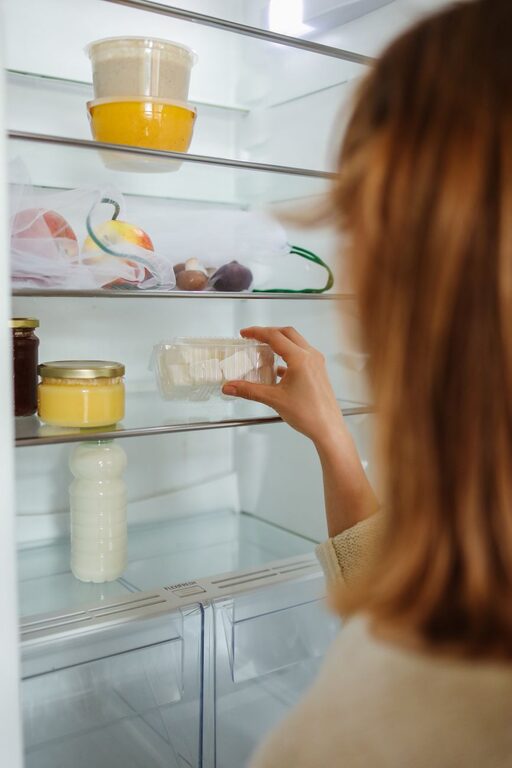
Give each part of the fridge a purpose. Consistent zones make it easier to put groceries away and find ingredients quickly.
A simple arrangement might include:
– Top shelf: Ready-to-eat foods, leftovers, and drinks
– Middle shelf: Dairy products and everyday ingredients
– Lower shelf: Raw meat, poultry, or seafood in sealed containers
– Drawers: Fruits and vegetables
– Door shelves: Condiments, sauces, and items that do not need the coldest space
The door is often the warmest part of the fridge, so it is usually better for sauces, pickles, and beverages than for highly perishable foods.
Keep raw foods sealed and stored below ready-to-eat items. This helps prevent leaks from reaching other foods. Use a tray or shallow container for packages that might drip.
Use Containers That Fit Your Space
Clear containers can make shelves easier to use because you can see what is inside. Choose containers with straight sides when possible, since they stack more efficiently than round ones.
You do not need to buy a complete matching set. Reusable food containers, small baskets, and sturdy bins can all work well. The most important features are that they are easy to clean, fit your shelves, and suit the types of food you store.
Useful fridge containers include:
– A bin for breakfast items
– A container for opened cheeses and deli foods
– A box for snacks
– A tray for small jars and sauces
– A marked container for leftovers that should be eaten soon
Use labels when they add value. A simple date label on leftovers can help you remember when they were stored.
Make Your Pantry Easy to Scan
A pantry works best when every category has a home. Group similar items together instead of placing food wherever there is an empty spot.
Common pantry zones include:
– Baking supplies
– Pasta, rice, and grains
– Canned foods
– Breakfast foods
– Snacks
– Spices and seasonings
– Cooking oils and vinegars
– Pet or household supplies, if stored nearby
Place frequently used items between waist and eye level. Store heavier cans and appliances on lower shelves, and keep rarely used items higher up. If you use a step stool, make sure it is stable and easy to access.
A small turntable can make the back of a deep shelf easier to reach. Tiered shelves are useful for cans and jars, while baskets can keep small packages from spreading across a shelf.
Use the First In, First Out Method
When putting away groceries, move older items toward the front and place newer items behind them. This simple system, often called first in, first out, helps you use food before it is forgotten.
Check the pantry and fridge before shopping. Write down foods that need to be used soon and plan a meal around them. For example, nearly full vegetables can be used in a soup, while extra grains can become a salad or side dish.
Keep opened packages together in a clearly visible area. A small “use soon” section can prevent food from getting lost behind newer items.
Store Food Properly
Good storage protects food quality and keeps shelves neat. Transfer dry goods from open bags into sealed containers when practical. Containers help keep products fresh and make it easier to see how much remains.
Label containers with the food name and, when useful, the date opened. This is especially helpful for flour, sugar, cereal, rice, pasta, and snacks.
Keep strong-smelling foods in sealed containers to reduce odors in the fridge. Allow hot food to cool appropriately before storing it, and avoid overfilling containers. Leave enough room for lids to close securely and for shelves to remain easy to clean.
For produce, keep fruits and vegetables in their appropriate drawers or storage areas. Some fruits release natural gases that can affect nearby produce, so separating certain items can help them stay fresh longer.
Maintain a Simple Routine
A tidy fridge and pantry are easier to maintain with small, regular tasks rather than occasional major cleanouts.
Try this routine:
Daily
– Return ingredients to their assigned places
– Wipe up spills immediately
– Store leftovers in labeled containers
– Check for food that should be used soon
Weekly
– Review the fridge before grocery shopping
– Remove spoiled or unwanted food
– Wipe visible spills and crumbs
– Move older items to the front
– Plan one or two meals around foods that need attention
Monthly
– Clean shelves, drawers, and pantry surfaces
– Check expiration dates
– Group categories that have become mixed
– Review storage containers and replace damaged ones
– Adjust the layout if your current system is inconvenient
Avoid Overcrowding
A crowded fridge or pantry is difficult to clean and makes it easy to forget what you own. Leave a little open space so air can move around the fridge and so packages are easy to remove.
When shelves are too full, items may be pushed to the back and forgotten. Instead of buying more storage containers, first consider whether you need to reduce duplicates or change how items are grouped.
A tidy space should support your routine. If a system takes too much effort, simplify it. The best organization method is one you can continue using.
Make Organization Work for You
Every household has different shopping habits, cooking styles, and storage needs. You may prefer open baskets, labeled containers, or a simple shelf-by-shelf approach. Start with the areas that cause the most trouble, such as a crowded produce drawer or a pantry shelf filled with small packages.
Make changes gradually and notice what helps. A few well-placed bins, a weekly food check, and a consistent restocking habit can make a significant difference. With these simple steps, your fridge and pantry can stay clean, practical, and easy to use.

Related Posts